
Please log-in to report.
 en
en
Africa, South America, North America, Europe, Asia, Oceania
Sign-up / Log-in to be up-to-date and informed!
Choose your News Preferences Below
Top News Stories Worldwide
Your Current Default Preferences are:
Zimbabwe Top Stories
for the 03 Nov - 09 Nov
< Previous week Next week >

1. ZANU-PF Faces Fresh Faction Tensions
Reports indicate growing factional tensions within Zimbabwe’s ruling ZANU-PF, centred on alleged efforts by party chair Oppah Muchinguri-Kashiri to block minister Anseleem Sanyatwe’s rise to the central committee amid claims of vote-buying. State-aligned media have also published unverified reports suggesting several senior figures backing Vice President Constantino Chiwenga in a “succession faction.” Analysts view the disputes as signs of internal rivalry ahead of the party’s 2027 congress.

2. Govt Defends Tobacco at Global Forum
The Zimbabwean government has taken a strong stance defending the country’s tobacco industry ahead of global anti-tobacco meetings in Geneva. Agriculture Minister Anxious Masuka warned that the World Health Organisation’s proposed restrictions threaten millions of farmers and Zimbabwe’s foreign currency earnings. Framing tobacco as central to national development, Masuka said Zimbabwe will push for a “fair and balanced” global policy while pursuing its goal to build a US$7 billion tobacco industry by 2030.

3. Treasury Backs Key Dam Projects
Treasury has released over US$101 million this year for the Gwayi-Shangani and Kunzvi dams, in line with President Mnangagwa’s directive to fast-track major infrastructure under his administration’s development agenda. Finance Minister Mthuli Ncube said the projects—now over 60% complete—symbolize the government’s push to fulfil long-delayed national commitments and bolster its “Second Republic” legacy. The investments underscore Mnangagwa’s bid to demonstrate progress on water security and rural development ahead of future elections.

4. Minister’s Income Claim Sparks Debate
Finance Minister Mthuli Ncube’s claim that most Zimbabweans have reached upper-middle-income status has drawn political scrutiny, as it contrasts sharply with widespread poverty and low wages. Speaking at the 2026 Pre-Budget Seminar, Ncube credited economic growth under the National Development Strategy 1 for the supposed progress. However, critics view his remarks as politically motivated rhetoric ahead of elections, arguing that the government is overstating success while citizens face soaring costs and stagnant incomes.

5. Nurses Warn of Mass Exodus
The Zimbabwe Nurses Association urged the government to improve salaries and working conditions to prevent strikes and a growing exodus of medical staff. Speaking in Masvingo, ZINA president Enock Dongo said over 4,000 nurses have applied for verification letters to work abroad due to poor welfare. He criticized the Health Ministry for withholding these letters, warning that continued neglect could cripple the country’s already strained public health system.

6. Zim Sets NDS2 After Mixed NDS1 Results
Zimbabwe is preparing its National Development Strategy 2 (2026–2030), shifting from economic stabilization to industrialization, value addition and inclusive growth. Finance Minister Mthuli Ncube says NDS2 will build on stability gains, boost domestic resource mobilization and strengthen governance. However, the Zimbabwe National Chamber of Commerce says NDS1 failed to meet key targets, including job creation and export value-addition, citing high costs, weak industrial competitiveness and slow agro-processing growth.
7. CZI Sees Zim Inflation Halving in 2025
Zimbabwe’s annual inflation could fall to between 15% and 20% by end-2025, supported by a stable gold-backed ZiG currency and strong bullion prices, the Confederation of Zimbabwe Industries (CZI) said. Inflation dropped to 32.7% in October from 82.7% in September amid negative monthly rates. The CZI noted that sustained currency stability could restore economic confidence after years of volatility. Gold output is projected to exceed 2024’s record 38.4 tonnes.

8. IMF Warns on Zimbabwe De-Dollarization
The IMF says Zimbabwe’s economy remains heavily dollarized, urging a gradual approach to de-dollarization backed by credible fiscal and monetary policies. It warned that confidence in the ZiG currency depends on policy stability and governance reforms. Meanwhile, the Confederation of Zimbabwe Industries called for further disinflation into 2026 to tackle stubborn inflation, noting that the ZiG remains weak against the USD, which continues to dominate transactions and savings.
9. Foreign Firms Squeeze Local Retailers
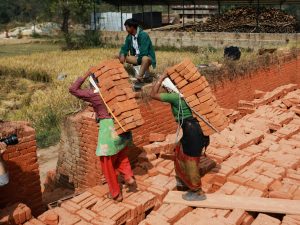
Zimbabwe’s brickmaking industry is under strain as foreign-backed companies expand into retail, squeezing local producers like Willdale Bricks, where workers have gone unpaid for months. Despite laws reserving retail for citizens, weak enforcement allows foreign firms to sell directly to customers. Analysts warn that the inconsistent application of the indigenization policy and rising competition are eroding the local industry. High production costs, taxes, and outdated technology have deepened the sector’s financial distress.