
Please log-in to report.
 en
en
Africa, South America, North America, Europe, Asia, Oceania
Sign-up / Log-in to be up-to-date and informed!
Choose your News Preferences Below
Top News Stories Worldwide
Your Current Default Preferences are:
Zimbabwe Top Stories
for the 08 Dec - 14 Dec
< Previous week Next week >

1. Zimbabwe Economy Poised for Growth
Zimbabwe’s economy is projected to grow 6.6% in 2025, led by agriculture, services, and mining. With 5% growth forecast for 2026. Inflation is expected to ease to single digits, aided by tight monetary policy. The Zimbabwe Economic Update calls for regulatory reforms to ease business operations and maintain macroeconomic stability. While growth may reduce poverty, rural households remain vulnerable to weather shocks and inflation, highlighting the need for inclusive, sustained reforms.

2. Zimbabwe Rail Plan Jumps to $3bn
Zimbabwe’s rail modernization plan has expanded from an initially stated $533 million to a $3 billion upgrade under NDS2. The revised program includes new rail lines, major corridor upgrades, 1,700km of rehabilitation, locomotive and wagon purchases, and re-electrification of key routes. Funded through PPPs, debt and state vehicles, the plan aims to boost freight capacity, support mining and industry, and restore the National Railways of Zimbabwe as a core economic driver.

3. Bulawayo Revises Land Policy
Bulawayo City Council revised its Land Alienation Policy for Non-Residential Land to remove barriers that frustrated investors. Powers for major investment land allocation have shifted from the Town Planning Director to the City Economic Development Officer (Cedo), who will coordinate expressions of interest and tenders. The Town Planning Department will manage land post-allocation and handle minor investments. Developers welcomed the changes, saying they will streamline processes, attract investment, and boost city development.

4. Econet Says Shares Undervalued
Econet Wireless, Zimbabwe’s largest telecom, says its share price on the local stock exchange is “grossly undervalued,” limiting its ability to raise capital for network investment and technology upgrades. The company is evaluating corporate measures to boost shareholder value, improve financing access, and strengthen long-term competitiveness. Investors are cautioned as these measures could materially affect the company’s securities. Econet serves over 16 million clients with a 72% market share.

5. Duty-Free Safari Imports Extension
Zimbabwe has extended its duty-free vehicle import policy for safari operators to boost tourism investment and modernize safari fleets. Announced by Finance Minister Mthuli Ncube, the policy aims to enhance service delivery, attract international visitors, and support eco-friendly, low-carbon tourism. Complementary incentives, including tax holidays and duty-free allowances, will further stimulate investment. The measures position Zimbabwe as a competitive, sustainable safari destination and strengthen the tourism sector’s contribution to the national economy.

6. Mnangagwa Halts Zanu-PF Car Gifting
President Emmerson Mnangagwa moved to curb factionalism in Zanu-PF by declaring himself the sole authority allowed to hand over vehicle donations, effectively ending a wave of luxury car gifts linked to succession jockeying. The directive, endorsed during recent top-party meetings, follows concerns that wealthy businessmen and senior officials were using donations to buy influence and build parallel power bases. Party leaders say centralising donations restores a single centre of authority.
7. Zanu-PF Courts Nkulumane Voters
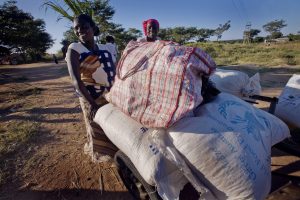
Zanu-PF launched a campaign for the Nkulumane by-election, unveiling large quantities of food aid, seed packs, boreholes, transformers, digital equipment, and revolving funds at a high-profile rally in Bulawayo. Senior leaders linked development benefits directly to electing the party’s candidate, Freedom Murechu, underscoring a strategy rooted in patronage and resource distribution. With promises of infrastructure upgrades, the ruling party aims to tilt a traditionally opposition-leaning constituency ahead of the December 20 vote.
8. Mnangagwa Fires Mines Minister
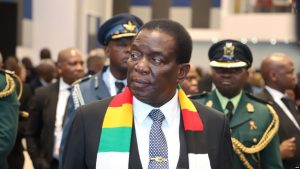
President Emmerson Mnangagwa dismissed Mines and Mining Development Minister Winston Chitando and appointed his deputy, Polite Kambamura, as the new minister. The announcement, issued by Chief Secretary Martin Rushwaya, cited constitutional authority without providing reasons for the change. Kambamura, a mining engineer and MP for Sanyati, assumes the role amid ongoing reforms in Zimbabwe’s mining sector, a key component of the national economic strategy.

9. Sweden Ends Aid to Zimbabwe
Sweden will phase out bilateral aid to Zimbabwe and Mozambique by August 2026 due to changing foreign policy priorities and European security concerns. The government will close its Zimbabwe embassy, which focused on development projects since 1980. Officials said the decision does not reflect local events. Sweden will continue ties through trade, investment, and multilateral channels, while maintaining humanitarian assistance despite ending bilateral programs.