
Please log-in to report.
 en
en
Africa, South America, North America, Europe, Asia, Oceania
Sign-up / Log-in to be up-to-date and informed!
Choose your News Preferences Below
Top News Stories Worldwide
Your Current Default Preferences are:
Zimbabwe Top Stories
for the 05 Jan - 11 Jan
< Previous week Next week >

1. Govt Consoles Vatican Envoy on Loss
The Zimbabwean government conveyed condolences to Apostolic Nuncio Archbishop Janusz Urbańczyk following the death of his mother, Mrs Irena Urbańczyk. Acting President Constantino Chiwenga said the nation shared the Catholic Church’s grief, describing the loss of a mother as deeply painful. He offered prayers and support to the Archbishop, his family and the Apostolic Nunciature during the period of mourning.

2. High Court Raps Magistrate Over Trial
The High Court criticized a Bulawayo magistrate for serious procedural errors in a criminal insult case involving a mentally ill accused, despite agreeing with the final acquittal. Justice Munamato Mutevedzi said the magistrate misunderstood mental disorder defenses, wrongly mixing a finding of insanity with sentencing procedures. He withheld certification of the proceedings, warning lower courts to apply mental health laws correctly when handling accused persons with serious psychiatric conditions.
3. Hwange Central Gets First CDF Payout
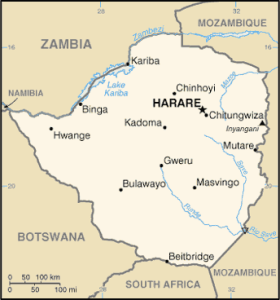
Hwange Central MP Daniel Molokele says the constituency has received its first Constituency Development Fund (CDF) disbursement since 2022. ZiG1.3 million was deposited under the 2024 national budget. The funds will be used for priority projects in five wards, with implementation starting immediately. Molokele said no CDF was released in 2023, and future allocations for 2025 and 2026 remain uncertain.

4. Matebeleland Projects Near Completion
Zimbabwe’s government says several major infrastructure projects in Matabeleland North are set for completion this year. Projects include Lake Gwayi-Shangani, the Bulawayo–Victoria Falls Highway and Lupane Provincial Hospital. Provincial minister Richard Moyo said the projects will boost water security, healthcare, tourism and trade. Authorities say the initiatives reflect the Second Republic’s devolution agenda and aim to unlock long-term regional economic growth.
5. ZCTU Presses Govt on Job Pledge
The Zimbabwe Congress of Trade Unions (ZCTU) challenged Finance Minister Mthuli Ncube to explain the 760,000 jobs promised under the National Development Strategy 1. The labour body noted that the 2026 budget omitted these employment targets, even as unemployment and informal work rise. ZCTU urged the government to adopt pro-employment budgeting to ensure economic growth creates decent, formal jobs instead of precarious livelihoods.

6. Zimbabwe’s Succession Crisis Deepens
Zimbabwe faced mounting uncertainty as debates over President Emmerson Mnangagwa’s succession, constitutional term limits and internal ruling-party divisions intensifed ahead of the 2028 elections. Alleged moves to extend presidential tenure, factional rivalry within ZANU-PF, and a weakened opposition raised concerns about democratic renewal, economic recovery and regional stability. These political strains unfolded alongside a long-term shift toward economic informality, challenging national narratives of modernity and prosperity.

7. Mutapa Fund Tightens SOE Oversight
Zimbabwe’s Mutapa Investment Fund says reforms introduced in 2024 are improving oversight and performance across its portfolio of 30 state-owned enterprises. Annual audits, professional management and new public-private partnerships have helped identify gaps, restore assets and attract investment. The fund is backing projects in rail, energy and mining, including up to US$950 million for mineral expansion, aiming to grow jobs, output and long-term national wealth.
8. NRZ Upgrades Fleet Amid Cash Strain
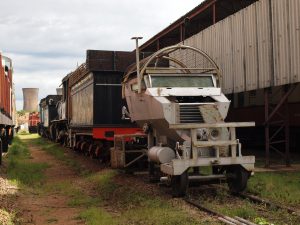
The National Railways of Zimbabwe refurbished over 80 wagons and locomotives through a public-private partnership with Zimasco, strengthening capacity as policy shifts bulk freight from road to rail. The program supports fleet modernization and improved efficiency under NDS2. However, NRZ remains under financial pressure, having delayed December salaries and failed to pay 2025 bonuses, underscoring ongoing cash-flow challenges despite operational gains.
9. Zimbabwe Tightens Reserved Sector Rules
Zimbabwe has given foreign-owned businesses operating in reserved sectors three months to regularize or exit. New empowerment regulations set clearer thresholds, compliance rules and divestment requirements. The effort is to boost local participation in low-barrier industries. While reaffirming openness to foreign investment, government says the move prevents locals from being crowded out and ensures growth translates into broader economic inclusion.